In high-pressure technology, safety valves are among the most important safety components. They play a crucial role in protecting systems, pipelines, and containers from overpressure. Since the precise and error-free operation of safety valves is directly linked to the safety of the entire system, process control forms the basis of quality assurance.
This article describes the procedures, methods and requirements related to the in-process testing of safety valves.
The importance of control during production
Process control encompasses a range of testing procedures applied at various stages of production and assembly. The aim of these tests is to identify and eliminate defects before the product reaches final assembly . For safety valves, the importance of this type of control is evident for two reasons:
-
Sensitivity of the valve actuation to minor errors during assembly and production
-
Avoid rework and waste in the final phase
-
Ensuring compliance with strict design standards
-
Increased safety and no leaks.
The most important phases of production control in the manufacture of safety valves
The manufacturing process of safety valves is divided into several main phases, each of which requires specific testing procedures:
 1. Inspection of the mechanical parts
At the beginning of the production line, metal parts such as valve bodies, covers, discs, seats, and spring retainers are machined. This step requires careful dimensional control and visual inspection.
Checkpoints:
-
The dimensions correspond to the technical drawings (within acceptable limits).
-
Check the smoothness of the sealing surface.
-
Surface roughness control
-
Check the central position of the inspection hatch and inspection channel.
-
Important surfaces must be free of cracks, scratches, and holes.
Tools used: Calipers, micrometers, special calipers, thickness gauges, digital calipers.
2. Check the welding process (if applicable).
For some types of safety valves with welded connections, checking the welding process is of great importance.
Controls:
-
The welding process complies with the WPS standard (Welding Procedure Specification).
-
The appearance of the weld (rust, cracks, spatter)
-
Non-destructive testing methods such as penetrant testing (PT) or magnetic particle testing (MT).
-
Check for complete penetration and absence of pores.
 3. Inspection of the purchased goods
Safety valves contain components such as springs, sealing rings, screws and delicate parts that can be sourced directly from suppliers.
Checkpoints:
-
Material Control Certificate and Manufacturer’s Certificate of Conformity (MTC, COC)
-
Investigation of the mechanical properties of springs (stiffness, elasticity, free length and length in the compressed state).
-
Check that the sealing material meets the required standards (NBR, Viton, PTFE).
-
Check the appearance and manufacturing accuracy of the standard parts.
4. Initial assembly inspection
Once the parts are prepared, the assembly phase begins. This involves initializing and installing the internal components.
Organizational elements:
-
Correct installation of the valve plate and valve seat
-
Make sure the disc rotates smoothly.
-
Install a spring of suitable strength and adjust the load.
-
Make sure there are no incorrect connection angles between the components.
Special notes:
If a pressure regulator (adjusting screw) is present, the initial setting value should correspond to the value specified in the drawing to avoid over-adjustment.
5. Check the tightening torque of the screws.
During final assembly, all screws and nuts must be tightened to the torque specified in the drawings or specifications.
Required tool: torque wrench
Advantages: Ensures stability and prevents components from breaking or leaking due to inadequate sealing.
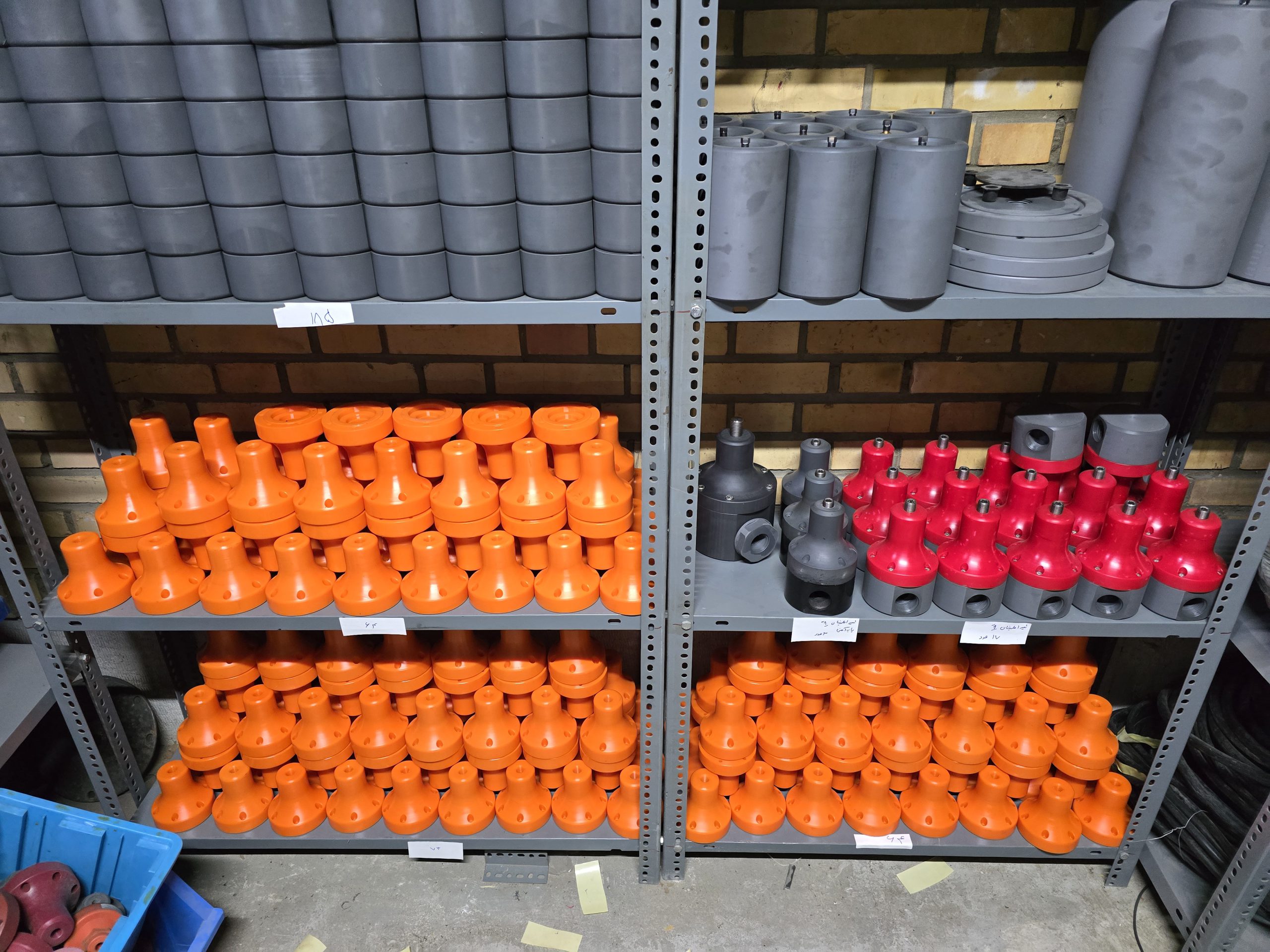 6. Final assembly inspection
During this phase, the assembled valves undergo a thorough inspection to prepare them for functional testing.
Checkpoints:
-
Accuracy of positioning of internal components (using precision measuring instruments or visual inspection)
-
Complete sealing between the assembled components
-
Checking the stroke (spring stroke, valve opening).
-
Check the inlet and outlet connections (threads, flanges).
7. Meets design and manufacturing standards.
At every stage of production control, compliance with international standards for the design and manufacture of safety valves is verified. These standards typically include the following:
-
ASME Section 8, Part 1 : Safety valves for pressure vessels
-
API 526 – Specifications for safety valves
-
API 527 – Leakage test
-
ISO 4126 – Safety standard for safety valves
8. Inspection protocols during production
One of the most important aspects of quality control is the recording and archiving of all test results. These records serve as reference material for future tests or failure analyses performed by third parties.
Common file types are:
-
Welding control sheet (welding log)
-
Assembly method and tensile torque
-
Component compatibility checklist
-
Confirmation form for admission to the final examination
Advantages of implementing strict controls throughout the entire process
-
Increased reliability of the final product
-
This reduces the need for rework or subsequent repairs.
-
Improving the security of installed devices
-
Reducing costs for warranty and customer service
-
It meets the requirements of customers and external testing organizations.
 In conclusion
Quality control is crucial in the manufacture of safety valves to ensure the quality, safety, and reliability of these vital components. Rigorous quality controls at every stage of production eliminate any structural, functional, or sealing defects, resulting in high-quality valves that meet international standards.
In today’s highly competitive world, factories with precise and documented process control systems can not only reduce production costs but also ensure customer trust and satisfaction.